
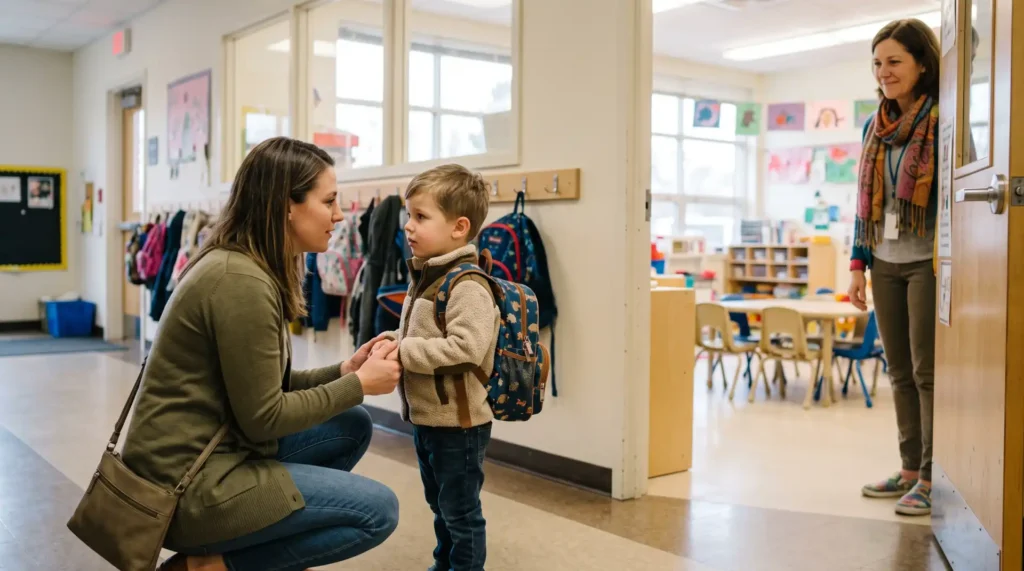
Starting preschool is a major milestone for children and their families. It introduces new friendships, classroom routines, creative activities, and opportunities to develop independence. However, the excitement of a new experience can sometimes be accompanied by tears, clinging, worries, and difficult goodbyes. For many parents, watching a child struggle to separate at the classroom door can be one of the most emotional parts of the preschool years.
Preschool separation anxiety is a common experience, particularly when children begin spending time away from familiar caregivers. A child who feels upset when Mom or Dad leaves is not necessarily being difficult, manipulative, or unprepared for school. The child may simply need more time to understand the new environment, develop trust in other caregivers, and learn that a temporary goodbye does not mean losing a secure relationship.
The good news is that parents can take practical steps to make these transitions more manageable. Predictable routines, short goodbye rituals, supportive teachers, and opportunities to practice independence can help children gradually feel more comfortable. The goal is not to prevent every tear but to help your preschooler develop the confidence to handle separation with growing security.
This guide explains why separation anxiety happens, what parents can do at home and during preschool drop-off, and when additional support may be helpful.
What Is Preschool Separation Anxiety?
Separation anxiety is the fear, worry, or distress a child experiences when separated from a parent or another trusted caregiver. It may appear when a child starts preschool, stays with a babysitter, attends a playdate, or spends time with relatives without a parent present.
Young children depend on familiar adults for comfort, protection, and help understanding unfamiliar situations. As they grow, they gradually learn that caregivers can leave and return, that other adults can help them, and that they can manage short periods of independence. This learning process takes time, and children do not all develop these skills at the same pace.
A preschooler experiencing separation anxiety might hold tightly to a parent’s hand, cry when it is time to enter the classroom, repeatedly ask when the parent will return, or refuse to participate until the parent stays nearby. Some children become quiet rather than tearful. Others complain of a stomachache, ask to go home, or become unusually irritable before school.
These reactions can be particularly noticeable during the first few days of preschool or after a break in the usual routine. A child who previously entered the classroom happily may also experience renewed anxiety after an illness, a family trip, a classroom change, or another significant transition.
It is important to remember that separation anxiety exists on a spectrum. Occasional distress during a transition is different from persistent, intense anxiety that interferes with a child’s ability to attend school, sleep, play, or participate in everyday activities.
For a helpful overview of the emotional side of starting preschool, parents can also read Preschool Through Mommy’s Eyes: The Joys and Challenge.
Why Do Preschoolers Become Anxious When Parents Leave?
New environments can feel unpredictable
Preschool introduces children to many unfamiliar experiences at once. They may encounter a new building, different adults, a larger group of children, unfamiliar sounds, and expectations they have not experienced at home. Even a friendly classroom can feel overwhelming when a child does not yet know what will happen next.
A predictable routine helps reduce some of that uncertainty. When children know where to put their backpacks, which teacher will greet them, and what activity comes first, the classroom gradually becomes more familiar.
Parents can help by talking about the school day before it begins. Rather than giving a long explanation, describe the experience in simple terms: “We will walk into your classroom, hang up your backpack, read a book with your teacher, and then I will come back after lunch.”
These small explanations give children a mental picture of what to expect without overwhelming them with information.
Preschoolers are still developing emotional skills
Young children often experience feelings more intensely than they can explain. A preschooler may understand that a parent is leaving but struggle to describe the fear, sadness, or uncertainty associated with that separation.
Instead of saying, “I’m afraid you won’t come back,” a child might scream, cling to a leg, throw a tantrum, or insist that a parent stay for just one more minute. These behaviors can communicate distress when a child does not yet have the language or coping skills to express it directly.
Parents can support emotional development by naming feelings without criticizing them. Saying, “You feel worried because I am leaving, and it is hard to say goodbye,” helps a child connect an emotional experience with words.
This approach does not mean agreeing that preschool is unsafe or abandoning the plan to attend. It means acknowledging the feeling while communicating confidence that the child can get through the transition.
For additional activities that help young children recognize and express emotions, explore Social-Emotional Learning at Home: Simple Activities to Support Preschoolers.
Changes at home can affect school drop-off
Separation anxiety may become more noticeable when family routines change. A new sibling, a parent returning to work, a move, a change in childcare, or an extended family visit can make a child seek additional reassurance.
Even positive events can temporarily increase a child’s need for closeness. A child may understand that a new baby is exciting but still worry about receiving less attention. Similarly, a preschooler who enjoyed a summer at home may find the return to a structured school schedule difficult.
When possible, maintain familiar routines during periods of change. Regular meals, bedtime stories, playtime, and affectionate interactions can help children feel secure even when other parts of life are different.
Parents do not need to eliminate every change before preschool can succeed. Instead, they can provide a dependable foundation that helps children adjust to new experiences.
Children may respond to a parent’s uncertainty
Parents often feel anxious when their children cry at drop-off. It is natural to wonder whether the child is happy, whether the teacher understands their needs, or whether leaving while they are upset is the right decision.
Children can sometimes notice a parent’s hesitation. Repeatedly asking, “Are you sure you’re okay?” or returning to the classroom several times may unintentionally communicate that separation is something to worry about.
A calm, affectionate goodbye can provide a different message: “I know this is hard, and I know you can do it. Your teacher will help you, and I will come back after snack time.”
Parents do not need to pretend they have no emotions. They simply need to offer a clear, reassuring message and follow through consistently.
 Signs of Separation Anxiety During the Preschool Years
The signs of separation anxiety vary from child to child. Some preschoolers cry loudly at the classroom door, while others express their concerns through repeated questions or physical complaints.
Common signs include clinging to a parent, resisting getting dressed for school, crying during drop-off, asking repeatedly when a caregiver will return, or becoming upset when a parent leaves the room at home. A child might also experience temporary changes in sleep, seek extra comfort at bedtime, or become reluctant to attend activities that previously felt enjoyable.
Physical complaints deserve attention, too. Some children report stomachaches, headaches, nausea, or feeling unwell when they anticipate separation. These symptoms can occur during anxiety, but parents should not automatically assume that every physical complaint is emotional. Persistent, severe, or unusual symptoms should be discussed with the child’s pediatrician.
Pay attention to what happens after you leave. Some children settle quickly once a trusted teacher welcomes them into an activity. Others remain distressed for much of the morning or struggle to participate in classroom routines.
Ask the teacher to describe the child’s adjustment after drop-off, including how long distress lasts, whether the child plays or interacts with classmates, and which strategies seem to help. This information can provide a more complete picture than the goodbye itself.
10 Practical Ways to Help Your Preschooler Feel Safe and Confident
1. Establish a predictable morning routine
A consistent morning routine can make preschool days feel less overwhelming. When children know what happens after waking up, getting dressed, eating breakfast, and leaving the house, they have fewer unexpected transitions to manage.
Try to follow a similar sequence each school day. You might eat breakfast, brush teeth, get dressed, pack a favorite water bottle, and read a short book before leaving. A simple picture schedule can help younger children understand the order of activities without needing to remember a long verbal explanation.
Prepare as much as possible the night before. Choosing clothes, packing the backpack, and checking school supplies can reduce morning stress for the whole family. Rushing, skipping breakfast, or arguing about what to wear may make an already anxious child feel less secure.
Allow enough time to travel to school without turning every step into a race. A calm routine will not eliminate every difficult goodbye, but it can create a more predictable starting point.
2. Create a short and loving goodbye ritual
A goodbye ritual gives children something familiar to expect when a parent leaves. It might include a hug, two kisses, a high-five, a special phrase, or a wave from the classroom door.
Choose a ritual that feels natural for your family and repeat it consistently. For example, you might say, “One big hug, one little kiss, and I’ll see you after rest time.” Your child will gradually learn the sequence and understand that it signals the beginning of the school day.
Keep the ritual brief. Lengthy goodbyes, repeated promises, and several attempts to leave can prolong the transition and make it harder for children to understand when the separation is actually happening.
Once you have said goodbye, allow the teacher to take over the transition. If the school has a specific drop-off procedure, work with staff to follow it. Consistency helps children learn that the routine remains the same even when their feelings are difficult.
A short goodbye should never mean dismissing a child’s distress. Offer warmth, make eye contact, acknowledge the emotion, and then follow through with the plan.
3. Talk honestly about when you will return
Preschoolers do not always understand clock time. Saying, “I’ll be back in three hours,” may mean very little to a child who is still learning to interpret numbers and schedules.
Use familiar daily events instead. Explain that you will return after lunch, after nap time, or before the afternoon snack, depending on the school’s schedule. These concrete markers give children a more understandable way to imagine the separation.
Avoid making promises you cannot guarantee. If you say you will pick your child up after lunch, try to honor that commitment. When unexpected changes occur, communicate them clearly through the teacher or another trusted adult whenever possible.
Trust develops through repeated experiences. Each time your child discovers that you leave, the school day continues, and you return as promised, the idea of separation can become less frightening.
4. Practice short separations before school
Children can gradually build confidence by practicing manageable periods apart from a parent. Start with situations in which your child feels relatively comfortable, such as playing with a trusted relative while you prepare a meal in another room.
You might move to another room for a few minutes, leave your child with a familiar caregiver while running a short errand, or arrange a brief playdate with a trusted family friend. Let your child know what will happen, say goodbye, and return when promised.
As confidence grows, gradually increase the length or complexity of the separation. The pace should reflect your child’s needs rather than an arbitrary deadline.
Avoid turning practice into a test of bravery. If a child struggles, provide support and try a smaller step next time. The goal is to help the child discover, through experience, that being apart can be manageable and that trusted adults remain available.
5. Introduce the classroom before the first day
Familiarity can reduce the number of unknowns a child must manage. If the preschool offers an orientation, open house, classroom visit, or short meet-and-greet, take advantage of the opportunity.
Let your child explore the classroom, meet the teacher, see where backpacks are stored, and discover the play areas. If an in-person visit is not available, look at photographs of the classroom or talk about the teacher and school routine.
Read picture books about starting preschool and role-play a typical morning with stuffed animals. One toy can be the child, another can be the teacher, and a third can play the parent who says goodbye and returns later.
During pretend play, let your child direct the story and express concerns. You may discover that a particular part of the school day feels frightening or confusing. That insight can help you prepare a more specific reassurance.
6. Use a comfort object when school rules allow
A small familiar object can help a child feel connected to home during a new experience. Depending on school policies, this might be a small stuffed animal, a family photograph, a soft fabric heart, or another safe item that fits in a backpack.
Explain how the object can provide comfort while your child participates in classroom activities. For example, the photograph can stay in a backpack pocket and be available at an appropriate time, rather than becoming something the child needs to hold continuously.
Check the preschool’s rules before sending anything. Some classrooms do not allow toys from home because they can be lost, damaged, or become a source of conflict. Teachers may have alternative ideas, such as a family photo displayed in a designated area.
A comfort object is a support, not a requirement. Some children find these items helpful, while others prefer a familiar song, a special goodbye phrase, or a predictable classroom job.
 7. Teach simple calming skills during peaceful moments
When a child is already crying intensely, it can be difficult to introduce a new coping strategy. Practice calming activities during relaxed moments so your preschooler becomes familiar with them before the next challenging goodbye.
One simple technique is bubble breathing. Ask your child to imagine blowing a large bubble, taking a gentle breath in and slowly breathing out. You can also try tracing the fingers of one hand while taking slow breaths or cuddling a stuffed animal while noticing the rise and fall of the belly.
Keep the activities playful and brief. Preschoolers do not need to master formal meditation to benefit from learning how to pause, breathe, and notice their feelings.
You can also create a small calm-down area at home with picture books, soft cushions, and a few safe sensory toys. Use it as a place for comfort and practice rather than as a punishment.
For more ideas, visit Mindfulness and Mental Wellness Practices for Preschoolers.
8. Work closely with your child’s teacher
Preschool teachers can be valuable partners in helping children adjust. They see how your child behaves after drop-off, which classroom activities attract their attention, and how they respond to reassurance from familiar adults.
Before the first day, share any concerns that may affect the transition. Tell the teacher what comforts your child, whether they have attended childcare before, and whether any recent changes might be making separation harder.
Agree on a consistent handoff plan. The teacher might greet your child at the door, help them put away their backpack, and invite them to begin a favorite activity. Having a specific next step can make the transition feel more purposeful.
Ask for reasonable updates about your child’s adjustment. Some families find it helpful to know whether their child settled shortly after drop-off, while others prefer a scheduled check-in after the first few days. Follow the school’s communication policies and avoid making constant updates a requirement if they interfere with classroom routines.
If distress continues, arrange a conversation with the teacher rather than trying a different goodbye strategy every morning. Together, you can identify patterns, review what has helped, and develop a consistent plan.
9. Praise effort instead of demanding bravery
Children build confidence when adults recognize their efforts. Instead of expecting a child to stop crying immediately, notice small steps toward independence.
You might say, “You held my hand while we walked to the classroom, and then you gave your teacher a high-five.” Another day, you could celebrate putting the backpack away or joining an activity after saying goodbye.
Specific praise helps children understand what they did well. It is more useful than simply saying, “You’re a big kid now,” especially if the child feels that being upset means they have failed.
Avoid shaming statements such as “Don’t be a baby,” “Big kids don’t cry,” or “You’re making Mommy sad.” These comments can make children feel responsible for managing adult emotions or ashamed of feelings they do not yet know how to regulate.
A child can be courageous and still feel worried. The goal is to help your preschooler learn that difficult feelings can be handled with support, not to make sadness disappear on command.
10. Make room for connection after school
Children sometimes hold their feelings together during the school day and release them when they reunite with a parent. Your child might become clingy, irritable, unusually quiet, or eager for extra attention after pickup.
Whenever possible, build a little unhurried connection into the afternoon. A snack together, a short walk, reading a favorite book, or playing on the floor can help your child reconnect after a busy day.
Ask open, simple questions about the experience. Instead of repeatedly asking, “Did you cry when I left?” try asking, “What did you play with today?” or “Who helped you at school?” Some children share more through drawing or pretend play than through direct conversation.
If your child says they missed you, acknowledge it without suggesting that preschool was a mistake. You might respond, “You missed me, and I missed you too. You spent time with your teacher, and now we’re together again.”
This balanced message reinforces connection while helping the child understand that time apart and a loving relationship can exist together.
What Should Parents Do When a Child Cries at Drop-Off?
Crying can make even a prepared parent question the entire morning plan. It helps to remember that crying is a sign of distress, but it does not automatically tell you how the rest of the school day will go.
Start by acknowledging the child’s feelings in a calm voice. You might say, “You wish I could stay. It’s hard to say goodbye, and your teacher is here to help you.” Give a hug, follow your established ritual, and leave according to the school’s agreed procedure.
Avoid sneaking away without saying goodbye. Although it may seem easier in the moment, disappearing can make some children more watchful because they do not know when a parent might leave. A clear, predictable goodbye gives the child an opportunity to learn what to expect.
It is also important to avoid repeatedly returning after leaving unless the school has asked you to do so or there is a genuine safety or care concern. Repeated departures can restart the emotional transition and make the routine harder to predict.
Afterward, communicate with the teacher to find out how your child settled. If the child became calm, joined an activity, and participated in the day, that is useful information for planning tomorrow’s drop-off.
If your child remains highly distressed, cannot engage in activities, or appears increasingly fearful, work with the school to understand what is happening. A supportive plan may include a consistent greeting, a gradual introduction to classroom activities, or guidance from a pediatrician or child mental health professional.
Common Mistakes That Can Make Separation Anxiety Harder
Staying too long at the classroom door
It is understandable to want to remain until your child stops crying. However, repeatedly extending the goodbye can make the moment of separation more confusing. A predictable, affectionate goodbye followed by a consistent departure often gives children a clearer routine.
This does not mean every child must follow exactly the same schedule. If the school recommends a gradual transition because of a child’s specific needs, work with the teacher on a structured plan rather than improvising a longer goodbye each morning.
Making promises that cannot be kept
Avoid telling a child that you will never leave, that nothing bad can ever happen, or that you will return in a few minutes if the school day will last much longer. These promises may temporarily reassure a child but can undermine trust when reality does not match the explanation.
Instead, use realistic language that emphasizes the plan and the people available to help. “I am going to work, your teacher will stay with you, and I will pick you up after your afternoon snack” is more concrete and dependable.
Criticizing or dismissing feelings
Statements such as “There’s nothing to be scared of” may be intended to reassure, but they can leave a child feeling misunderstood. The child may not be able to explain the fear, even if the parent believes the environment is safe.
A better approach is to recognize the emotion while remaining confident in the next step. “You feel nervous about being here. We will follow our goodbye routine, and your teacher will help you get started” communicates empathy without reinforcing avoidance.
Comparing children
One child may run into preschool happily while another needs several weeks to adjust. Comparing siblings or classmates can add embarrassment to an already difficult experience.
Focus on your child’s own progress instead. A shorter goodbye, a few minutes of independent play, or a growing willingness to talk about school can all be meaningful signs of improvement.
How Long Does Preschool Separation Anxiety Last?
There is no single timeline that applies to every child. Some preschoolers become comfortable after a few days, while others need several weeks of consistent support. The transition may take longer when a child is adjusting to a new school, experiencing family changes, or has had limited opportunities to spend time with other caregivers.
Look for gradual improvement rather than expecting a perfectly smooth transition every day. Your child might still cry at the classroom door but begin settling more quickly, participating in more activities, or talking positively about a teacher or classmate. These changes can suggest that familiarity and trust are growing.
Progress may also be uneven. A child who has adjusted well can experience a difficult morning after poor sleep, an illness, a school holiday, or an unexpected change in routine. One hard day does not necessarily mean that earlier progress has disappeared.
If the anxiety remains intense, becomes more frequent, or prevents your child from attending preschool or participating in normal activities, seek professional guidance instead of waiting indefinitely for the problem to resolve. The right support depends on the child’s age, symptoms, circumstances, and level of distress.
 When Should Parents Seek Professional Help?
Separation anxiety is often part of early development, but persistent or severe distress deserves attention. Consider speaking with your child’s pediatrician if anxiety continues without meaningful improvement, disrupts daily life, or appears to be getting worse despite consistent support.
Additional signs that warrant discussion include repeated refusal to attend preschool, extreme fear that something terrible will happen to a caregiver, frequent physical complaints associated with separation, severe sleep difficulties, or distress that interferes with playdates and other age-appropriate activities.
A pediatrician can review your child’s development, health, sleep, and recent experiences. They can help determine whether the behavior appears consistent with a common adjustment difficulty or whether a referral to a child mental health professional may be appropriate.
Separation anxiety disorder is different from ordinary, temporary separation distress. A qualified professional evaluates the intensity, persistence, and impact of symptoms before making a diagnosis. Parents should not assume that a child has a disorder simply because they cry during the first week of preschool.
When treatment is needed, support may involve parent guidance, behavioral strategies, or therapy adapted to the child’s developmental level. The Child Mind Institute provides an accessible overview of separation anxiety in children, including signs that anxiety may be interfering with everyday life.
Seek urgent medical care when physical symptoms or behavior suggest an immediate health or safety concern. For ongoing emotional concerns, early discussion with a pediatrician can help families choose appropriate next steps.
Helping Parents Manage Their Own Separation Anxiety
Children are not the only ones who may struggle with preschool drop-off. Parents can feel sadness, worry, guilt, or uncertainty when leaving a young child in someone else’s care. These feelings can be especially strong when preschool marks the first extended period apart.
It is helpful to recognize that parental emotions deserve attention, too. You may miss your child, worry about whether they are eating or playing, or feel conflicted about returning to work. Those reactions do not mean you are making the wrong decision.
Create a realistic plan for managing your own transition. After drop-off, take a few minutes to breathe, begin a familiar task, or connect with someone supportive. If the preschool provides a scheduled update, agree on a communication plan that gives you reassurance without interrupting the classroom throughout the day.
Try to separate what you know from what you fear. If the teacher reports that your child settled and participated in activities, allow that information to guide your expectations for the next day. If there are genuine concerns, discuss them directly with the school rather than relying on repeated worry.
Remember that preschool is a gradual step toward independence, not a measure of how much your child loves you. A secure relationship can provide the foundation for exploring new environments, forming friendships, and learning from other trusted adults.
Frequently Asked Questions About Preschool Separation Anxiety
Is separation anxiety normal in preschoolers?
Yes. Many young children experience some distress when they separate from parents or familiar caregivers, especially during new transitions. The intensity and duration vary. When anxiety is persistent, severe, or disruptive to everyday activities, parents should consult a pediatrician or qualified child mental health professional.
Should I leave my child at preschool if they are crying?
In many cases, a brief, predictable goodbye followed by a supportive handoff to the teacher is appropriate. However, the best approach depends on the child’s needs and the school’s procedures. Work with the teacher to determine whether your child settles after you leave and whether a more structured transition plan is needed.
Should I sneak away when my child is distracted?
It is generally better to say goodbye clearly rather than disappear without warning. A consistent goodbye ritual helps your child understand what is happening and builds trust in the routine. Keep the farewell loving and brief, then follow the plan agreed upon with the teacher.
Can a favorite toy help with separation anxiety?
A comfort object may help some children feel connected to home during a transition. Ask the preschool whether a small stuffed animal, family photograph, or other familiar item is permitted. If objects are not allowed, a special goodbye phrase or another familiar routine may provide comfort instead.
What if my child is fine at school but clingy at home?
Some children manage the school day successfully but seek extra closeness when they reunite with a parent. Offer connection, maintain predictable routines, and watch for changes in sleep, behavior, or participation in daily life. If the clinginess is intense or interferes with normal activities, discuss it with your pediatrician.
Can separation anxiety return after a child has adjusted?
Yes. A new classroom, a school break, an illness, family changes, or a stressful experience can temporarily make separation difficult again. Return to familiar routines, communicate with the teacher, and provide reassurance while maintaining realistic expectations.
Final Thoughts: Building Confidence One Goodbye at a Time
Preschool separation anxiety can be challenging for children and parents, but it does not have to define the preschool experience. With patience, predictable routines, supportive teachers, and opportunities to practice manageable separations, many children gradually become more comfortable spending time away from their caregivers.
The most helpful approach combines empathy with consistency. Let your child know that their feelings matter, explain what will happen, keep goodbye promises, and celebrate small signs of growing independence. Avoid comparing your child with others or expecting every morning to be easy.
Progress is not measured only by whether a child cries. It can also be seen in a growing willingness to enter the classroom, trust a teacher, join an activity, or talk about the day afterward. These small steps help children learn that they can experience difficult feelings and still move forward with support.
If anxiety remains intense or interferes with everyday life, do not hesitate to ask your pediatrician for guidance. Every child develops at a different pace, and getting help when needed is a positive step toward well-being.
At Preschool With Mommy, the goal is to support families through the early years with practical ideas that encourage learning, emotional growth, and stronger relationships. With a calm plan and a little patience, each goodbye can become an opportunity for your child to build confidence, security, and independence.