
Simple SEL Activities to Support Your Preschooler
There are numerous ways to incorporate SEL activities into your daily routine. These activities don’t have to be complicated; small changes can have a lasting impact on your preschooler’s emotional development. Here are some easy activities to try at home:
1. Feeling Faces Chart
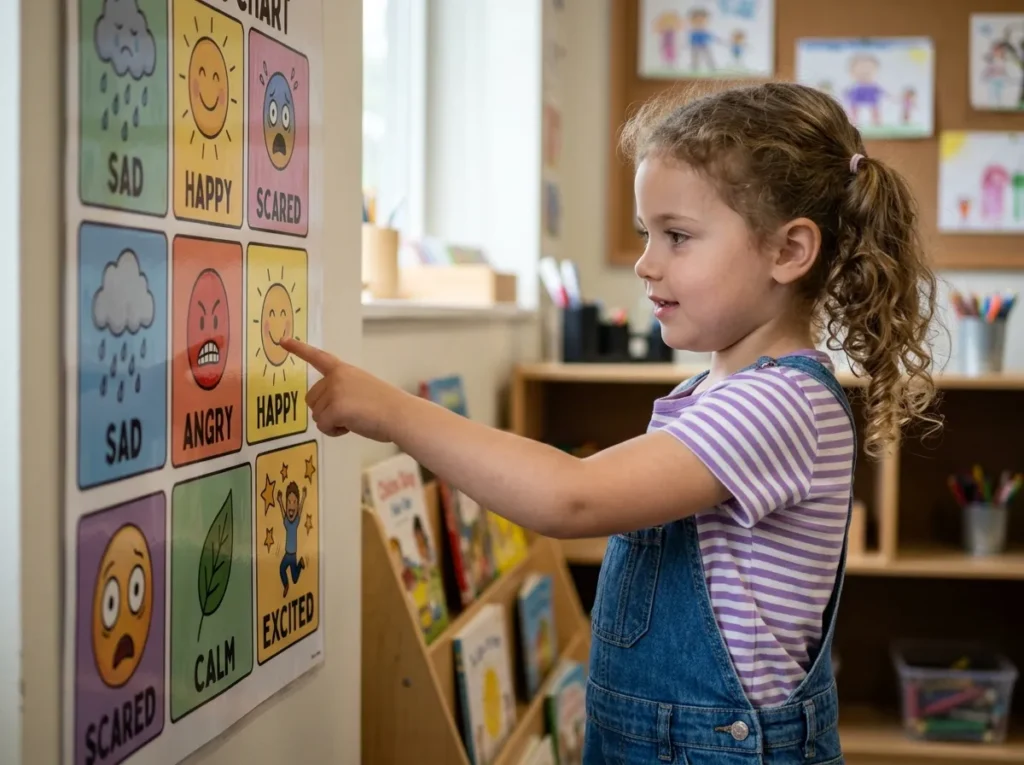
A simple and effective activity is the “Feeling Faces Chart.” Create a chart with different facial expressions representing a variety of emotions (happy, sad, angry, surprised, etc.). Ask your child to identify their emotions each day by pointing to the face that best represents how they feel. This activity helps children learn to identify and express their emotions.
2. Emotion Sorting Games
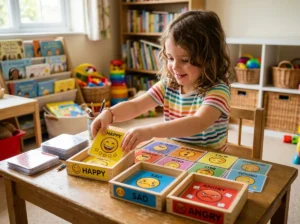
Emotion sorting games are a fun way to help your child understand different emotions and appropriate responses. Create flashcards with pictures of people expressing different feelings, and ask your child to sort the cards by the emotion depicted. For example, “Who looks happy?” or “Which card shows surprise?” This helps children connect visual cues to emotional states.
3. Practicing Empathy Through Role Play
Role-playing allows children to walk in someone else’s shoes, developing empathy in a safe and supportive way. Use toys or puppets to act out scenarios where characters face challenges, such as someone feeling sad or upset. Ask your child how they think the character would feel and what they could do to help them feel better. This encourages empathy and problem-solving skills.
4. Create a Calm-Down Corner
Set up a cozy space in your home where your preschooler can go to calm down when they’re feeling overwhelmed. Include soft pillows, calming books, or stress-relief toys. Encourage your child to visit this space when they need to regulate their emotions. The calm-down corner helps them learn to manage their emotions independently.
Using Books and Stories to Teach SEL
Books are an excellent tool for teaching SEL. Reading stories that highlight emotional situations helps children understand feelings, empathy, and appropriate social responses. Here are a few books that can support SEL in your preschooler:
- The Color Monster: A Pop-Up Book of Feelings – This book helps young children identify and express their emotions by introducing different colors to represent different feelings.
- Listening to My Body – A great resource for teaching mindfulness and helping children connect their emotions to physical sensations.
- Have You Filled a Bucket Today? – This book teaches children the concept of kindness and the importance of positive interactions with others.
If you want to dive deeper into social-emotional learning, the Collaborative for Academic, Social, and Emotional Learning (CASEL) offers comprehensive resources for parents and educators. Additionally, PBS Parents provides fantastic resources on SEL activities that can easily be implemented at home.
How to Encourage SEL in Everyday Activities
Incorporating SEL into everyday activities can be as simple as modeling positive behavior and discussing feelings during daily routines. Here are some practical tips:
- During meals, ask your child about their day and encourage them to express their feelings about different events.
- While playing, use it as an opportunity to teach turn-taking, sharing, and managing frustration.
- When reading together, pause to discuss the emotions of the characters and what they might be feeling.
For more tips on fostering emotional intelligence in your preschooler, check out our Mindfulness & Mental Wellness for Preschoolers.
Conclusion
By supporting your preschooler’s social-emotional learning, you’re giving them the tools they need to succeed in life, from building relationships to navigating challenges. The activities and techniques shared here can easily be integrated into your daily life, helping your child grow emotionally and socially. Start small and be consistent – every effort counts toward building emotional intelligence in your preschooler!