
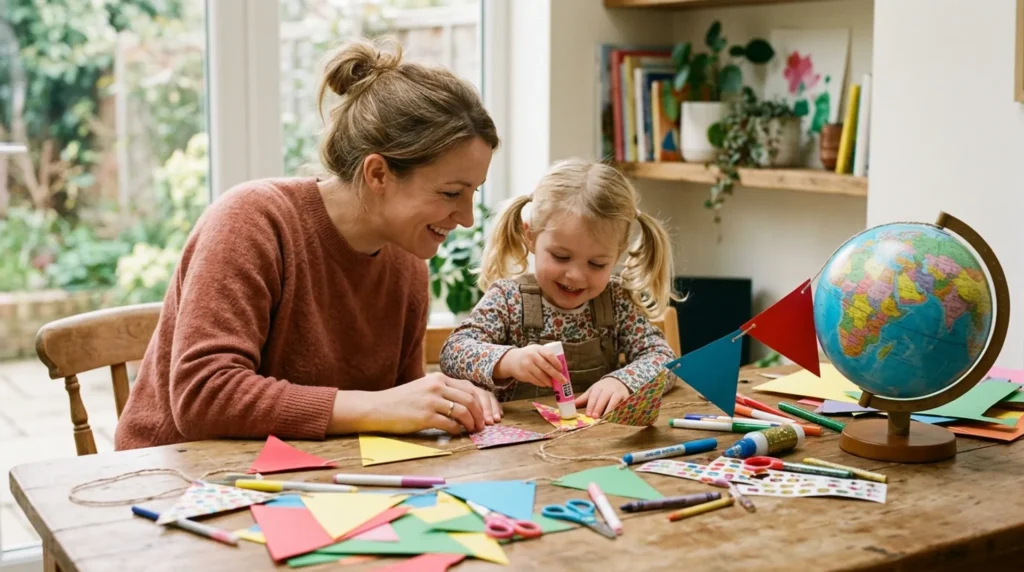
Why Teaching World Cultures Starts at Home
Young children are far more ready to learn about the world than most parents realize. Research from Nationwide Children’s Hospital shows that children as young as three years old begin noticing differences in physical appearance, language, and culture. That makes the preschool years a golden window of opportunity. When you introduce multicultural activities for preschoolers during this time, you are not just teaching geography or customs. You are shaping how your child sees and relates to the entire world around them.
And here is the beautiful part: you do not need to travel the globe to do it. With a little creativity, some craft supplies, a few picture books, and plenty of enthusiasm, you can take your preschooler on a cultural journey right from your living room.
In this guide, you will find practical, playful, and meaningful activities to help your little one develop cultural awareness, empathy, and an appreciation for the richness of our diverse world.
The Real Benefits of Multicultural Learning for Preschoolers
Before diving into the activities, it is worth understanding why multicultural education matters so early in a child’s life. This is not about political ideas or checking boxes. It is about giving your child a broader, richer lens through which to experience life.
It Builds Empathy and Emotional Intelligence
When preschoolers hear stories, try foods, and make crafts from cultures different from their own, they naturally begin to understand that other people have different but equally valid ways of living. According to Hatching Dragons Early Years, early multicultural experiences help children build empathy, manage conflict, and appreciate differences in ways that last well into adulthood.
This connects directly to the social-emotional skills we already know are critical in the preschool years. When a child learns that children in Japan take off their shoes before entering their home, or that families in Mexico celebrate birthdays with a pinata, they begin building a mental model of a world that is wide, varied, and full of interesting people.
It Strengthens Your Child’s Own Identity
There is an often-overlooked flip side to multicultural learning: it also helps children feel proud of their own background. When kids see their own culture represented, heard, and celebrated alongside others, they develop confidence and a stronger sense of self-worth. This is especially powerful for children from minority backgrounds, but it benefits every child.
It Supports Academic and Social Success
The Century Foundation found that students from diverse, culturally inclusive environments demonstrated higher academic achievement and stronger communication skills. Starting this exposure at the preschool level through play, story, and hands-on activity lays a cognitive and social foundation that carries forward throughout school. As we explored in The Importance of Play in Preschool Development, meaningful play is the primary vehicle for early learning. Multicultural activities are simply purposeful play with a global perspective.
Around the World in Your Living Room: Activity Ideas by Culture
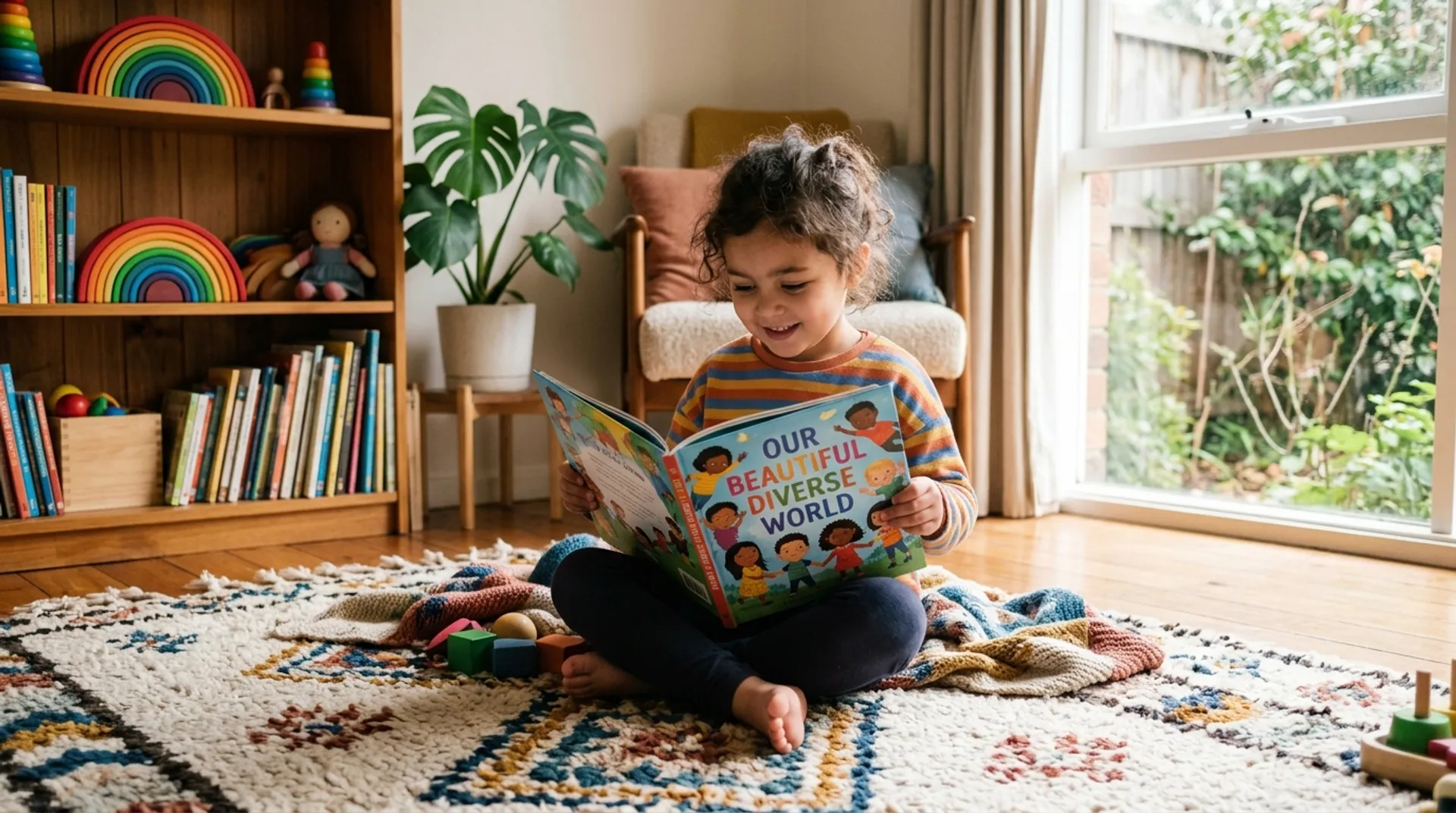
The following activities are organized by cultural region, giving you the flexibility to spend a day, a week, or even a month exploring each part of the world. Keep things light, fun, and child-led. Follow your preschooler’s curiosity and let the questions guide the experience.
Asia: Paper Lanterns and Dragon Art
Chinese New Year is one of the most recognized and joyful cultural celebrations in the world, and it translates beautifully into preschool art. Use red and gold paper to create simple hanging lanterns by folding and cutting strips. Talk about why red is a lucky color in Chinese culture, and what it means to welcome a new year with light and noise.
For older preschoolers, try making a simple paper dragon by connecting paper chain loops in bright colors. Play traditional Chinese music softly in the background as you work. Then pull out a world map or globe and find China together. This simple act of pointing to a country on a map anchors the cultural experience to real geography in a developmentally appropriate way.
From Japan, you can introduce the art of origami with simple folds like a paper boat or tulip. The focus required to fold carefully also supports fine motor development and patience. Pair it with a read-aloud of a Japanese folktale from your library.
Latin America: Maracas, Flowers, and Festive Color
Latin American cultures are vibrant, musical, and full of sensory richness that preschoolers adore. Make simple maracas by filling small plastic bottles or paper cups with dried rice or beans, sealing them, and decorating with bright paint and stickers. Let your child shake and dance to Latin music playlists available on family-friendly streaming apps.
You can also introduce the Mexican tradition of Dia de los Muertos in an age-appropriate, positive way by focusing on its core message: remembering and honoring loved ones with color and celebration. Create simple tissue paper marigolds together. These flowers are called cempasuchil and are traditionally used to guide spirits home. Children enjoy the tearing and layering process, and the flowers make beautiful decorations.
From Brazil, explore the concept of Carnival through color mixing and body movement. Put on some samba music and make simple paper crowns decorated with bright feathers, stickers, and paint. The physical, sensory, and creative dimensions of this activity work beautifully together for preschool-age learners.
Africa: Drum Rhythms and Kente Color Patterns
Africa is a continent of extraordinary diversity, spanning 54 countries and thousands of distinct cultures and languages. For preschoolers, you can begin with West African culture, which has particularly rich traditions in drumming, textiles, and storytelling.
Create simple drums from oatmeal containers or coffee cans covered with felt or paper. Practice simple rhythms together. Explain that in many West African communities, drums are not just instruments but a form of communication and community celebration.
For a craft activity, introduce the colorful Kente cloth patterns from Ghana. Cut strips of bright paper in yellow, green, red, black, and gold, and help your child weave them into a simple paper mat. This activity is wonderful for fine motor development and introduces the concept that clothing and patterns carry cultural meaning and pride.
Europe: Folk Dances and Seasonal Traditions
Europe offers a rich calendar of seasonal traditions that align naturally with the preschool year. From Dutch tulip festivals in spring to Scandinavian Lucia celebrations in December, there is always something culturally relevant to explore.
One accessible activity is making a simple Dutch windmill craft from cardstock and a brass paper fastener. Pair it with a conversation about the Netherlands: why are there so many windmills? What do they do? Where is Holland on the map?
From Ireland, you can explore Celtic knotwork patterns by having children trace simple interlocking loops and color them in. From Greece, make simple mosaic art by tearing colored paper into small pieces and arranging them into a design. Many ancient Greek buildings featured beautiful mosaic floors, and this connection to history is something even a four-year-old can grasp and find fascinating.
Multicultural Books Every Preschool Home Needs
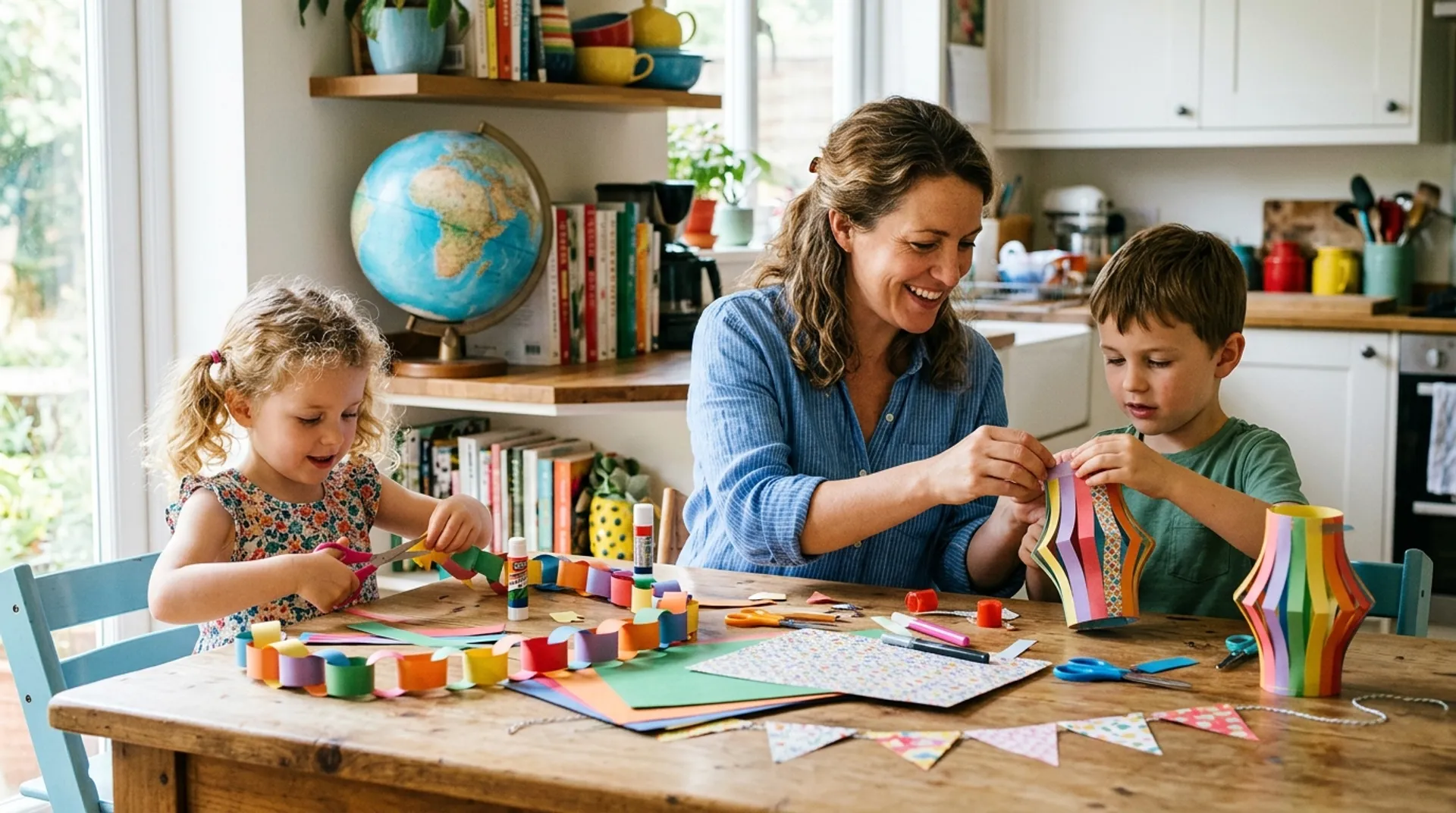
Books are one of the most powerful tools for cultural learning. A great picture book can transport a child to another world, introduce new faces and traditions, and spark conversations that deepen empathy and understanding. According to the International School Ho Chi Minh City, incorporating multicultural books into daily reading time is one of the most effective practices educators and parents can use to promote cultural diversity in early childhood.
Here are some excellent titles to look for at your library or bookstore:
- Last Stop on Market Street by Matt de la Peña – Celebrates community, gratitude, and urban diversity.
- Alma and How She Got Her Name by Juana Martinez-Neal – Explores Latin American family heritage and identity.
- The Name Jar by Yangsook Choi – A gentle, beautiful story about a Korean child navigating a new culture.
- Islandborn by Junot Diaz – A child tries to remember her Caribbean homeland through the stories of her community.
- Global Baby Girls by Maya Ajmera – A board book featuring real photos of baby girls from cultures around the world.
After reading each book, ask your child open-ended questions: “What did you notice that was different from our home? What was the same?” These conversations are where the deepest learning happens.
Cooking Together: The Most Delicious Way to Explore the World
Food is one of the most universal and joyful ways to explore culture with preschoolers. Children who try foods from other cultures develop not only their palate but also their openness to new experiences. Even the process of cooking together teaches math (measuring), science (mixing, heating), and social studies (where does this food come from?).
Simple Cultural Recipes to Try with Preschoolers
Keep it simple and safe. Here are a few beginner-friendly ideas:
Japanese Onigiri (Rice Balls): Cook sticky rice and let your child press it into triangle shapes with wet hands. Wrap with a strip of nori (seaweed). Talk about how children in Japan often bring these to school in their lunch boxes.
Mexican Guacamole: Let your child mash avocados with a fork, squeeze lime juice, and stir in a little salt. This is a great fine motor activity and introduces the concept that many beloved foods around the world come from specific places and cultures.
Indian Mango Lassi: Blend together mango, yogurt, and a little honey. Mango lassi is a popular drink across India, Pakistan, and Bangladesh. This is a simple, no-cook recipe that even the youngest preschoolers can help with using a blender (with supervision).
After cooking, sit down together to enjoy the food and pull up a map or a picture book about that country. Creating a full sensory experience around a culture makes the learning stick in a way that no worksheet ever could. For more ideas on how to build rich learning experiences through everyday activities, visit our post on How to Create a Stimulating Learning Environment for Your Preschooler.
Music, Movement, and Languages: Going Beyond Crafts
Multicultural learning does not stop at the craft table. Music and movement are two of the most developmentally powerful vehicles for cultural exploration in the preschool years.
World Music for Little Ears
According to Kokotree Early Education, introducing children to music from different cultures not only expands their cultural understanding but also enhances gross motor development and creativity. Create a world music playlist on a family-friendly streaming service and introduce a new musical style each week. Listen to taiko drumming from Japan, steel drum music from Trinidad, kora melodies from West Africa, or flamenco guitar from Spain.
Move your bodies to the music. Dance freely, stomp feet, clap hands. Young children learn through their whole bodies, and music invites that full-body engagement beautifully.
Teach Simple Words in Other Languages
You do not have to be bilingual to introduce basic language concepts. Teaching your preschooler how to say “hello,” “thank you,” and “I love you” in several languages is a simple, powerful activity that communicates respect and opens doors.
Try: Hola (Spanish), Bonjour (French), Konnichiwa (Japanese), Jambo (Swahili), Namaste (Hindi). Write each word on a card with a flag sticker and post them on the refrigerator. Practice a new one each day over breakfast.
How to Make Multicultural Learning a Year-Round Habit
The most impactful multicultural education is not a one-time event. It is woven into the fabric of everyday home life. Here are some practical ways to keep it going throughout the year:
Create a “Countries We’ve Explored” wall map. Each time you learn about a new country, mark it on a world map. Preschoolers love seeing visual evidence of their learning, and this creates a running reference they will return to again and again.
Visit local cultural events and restaurants. Many communities host cultural festivals, international food markets, or museum events throughout the year. These real-world experiences make a powerful complement to at-home activities.
Diversify your toy basket. Include multicultural dolls, figures, and puppets in your preschooler’s play space. Representation in play materials communicates that all kinds of people are part of the normal fabric of life.
Celebrate a cultural holiday each month. January brings Chinese New Year. February has Carnival season. March offers Holi. April brings Passover and Easter. The calendar is full of opportunities to honor traditions from around the globe in age-appropriate, joy-filled ways.
When multicultural activities for preschoolers become part of your regular routine rather than a special occasion, the values they build – empathy, curiosity, respect, and openness – become part of who your child is. And that is perhaps the most important gift you can give them as they grow into citizens of this extraordinary, diverse world.
For more ways to create a rich and nurturing home learning environment, explore our posts on 10 Fun and Easy Preschool Activities to Do at Home and Creative Preschool Crafts to Boost Your Child’s Imagination.